How to Choose Professional Speaker Cables for Optimal Sound Quality and Durability
- Share
- Issue Time
- Oct 9,2026
Summary
Selecting the right professional speaker cables is crucial for optimizing any high-fidelity audio system, as they significantly impact sound clarity, power delivery, and overall listening immersion. Many audiophiles often overlook cables, treating them as mere accessories, but they are vital conduits that transmit the audio signal from the amplifier to the speakers. Poor-quality cables can introduce signal degradation, resistance, and noise, leading to a flat or dull sound. High-quality cables,
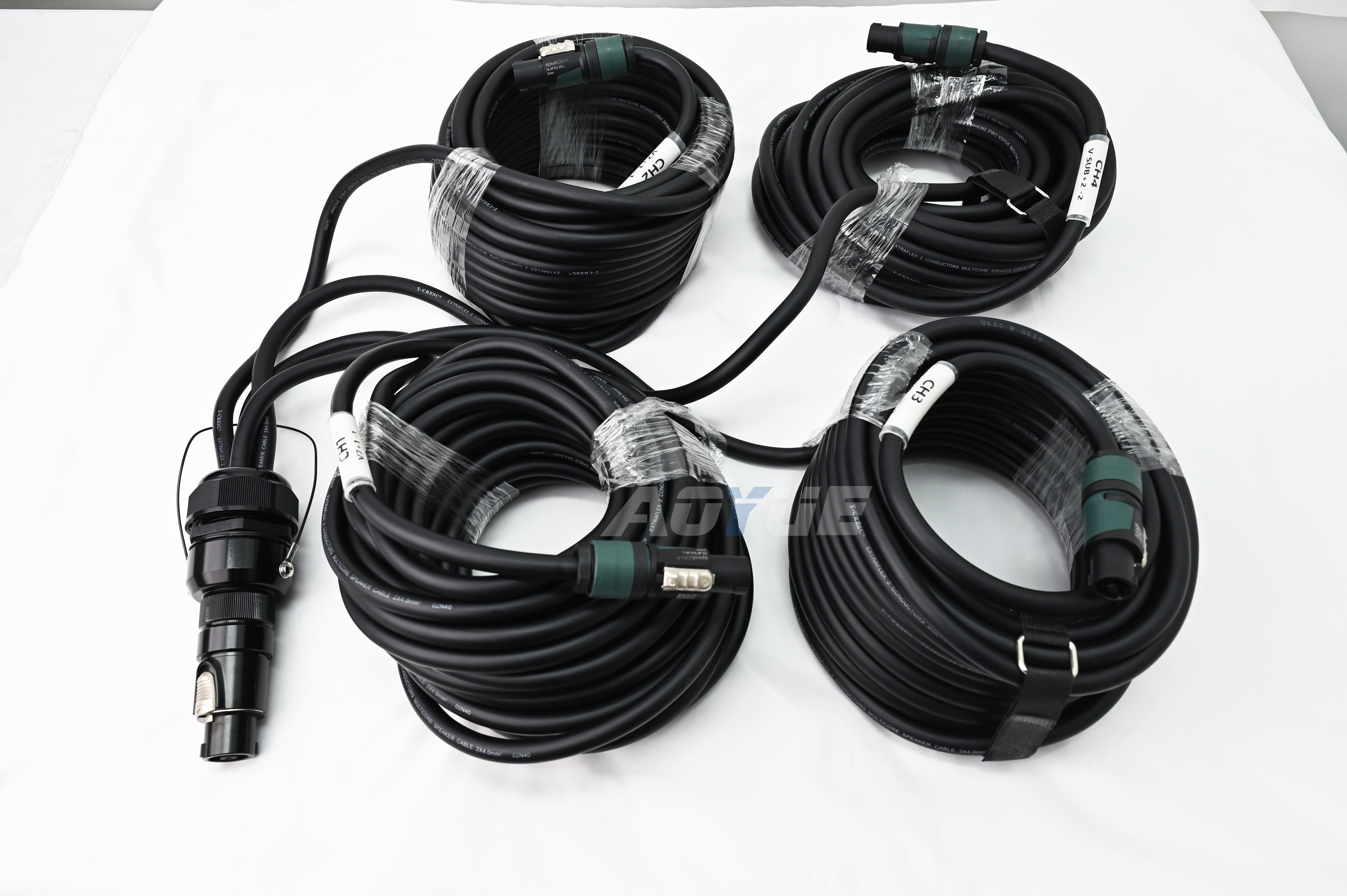
As an audio enthusiast, I know the difference a quality sound system can make to an immersive listening experience. Often, we focus on speakers and amplifiers, but overlook the critical role of professional speaker cables. These unsung heroes are fundamental to audio signal transmission, impacting everything from clarity to power. Today, I'll guide you through how to choose professional speaker cables for optimal sound quality and durability, ensuring every note is delivered with precision and longevity.
The Foundation of Optimal Sound: Understanding Your Professional Speaker Cables
Before diving into the technical specifications of speaker cables, it's essential to understand why they are a cornerstone of any high-fidelity audio setup. Many audiophiles meticulously select their speakers and amplifiers but then connect them with the most basic, low-quality wires, unknowingly creating a bottleneck that prevents their system from reaching its full potential. A great sound system is an ecosystem where every component matters, and the cables are the vital pathways that carry the lifeblood of your audio—the electrical signal.
Think of it like a high-performance race car. You could have the most powerful engine and the most aerodynamic chassis in the world, but if you fit it with low-quality tires, you'll never achieve its true performance on the track. Professional speaker cables are the "tires" of your audio system; they provide the final, critical connection that translates the power and nuance from your amplifier into the sound you hear from your speakers.
Why Professional Speaker Cables Are Crucial for Your Audio Experience
The debate over whether speaker cables make a difference has been a long-standing topic in the audio community. However, the consensus among audio engineers and seasoned enthusiasts is clear: while excessively expensive cables with outlandish claims should be viewed with skepticism, high-quality, well-engineered cables demonstrably improve audio performance. Poor-quality cables can introduce a host of problems, including signal degradation, resistance that saps power, and susceptibility to noise, all of which can result in a listening experience that is flat, dull, and lacks dynamic range.
A professionally designed speaker cable serves two primary functions: to transfer the audio signal with absolute purity and to protect that signal from outside interference. When a cable succeeds in these functions, the benefits are audible. Listeners often report tighter, more clearly defined bass, improved stereo imaging that creates a more expansive "soundstage," and greater accuracy across the entire frequency spectrum. In essence, a superior cable allows you to hear your music exactly as the artist and sound engineer intended, with all its depth and complexity intact. This is because high-quality cables are constructed with better materials and design principles that minimize electrical properties like resistance, capacitance, and inductance, which can otherwise "color" or distort the sound.

The Basic Principles of Speaker Cable Functionality
At its core, a speaker cable's job is straightforward: to carry a low-voltage electrical audio signal from your amplifier to your speakers. An amplifier takes a line-level signal from a source (like a turntable, CD player, or streamer) and boosts it to a level powerful enough to physically move the drivers—the cones and domes—inside your speakers. These movements create sound waves that our ears interpret as music.
The speaker cable is the conduit for this amplified power. It typically consists of two bundles of wires, or conductors: one for the positive (+) signal and one for the negative (-) signal. These are insulated from each other and housed within a protective outer jacket. The amplifier pushes and pulls electrons through these conductors in a pattern that perfectly matches the waveform of the audio signal. This electrical current flows into the speaker's crossover network, which divides the frequencies and sends them to the appropriate drivers (woofers for low frequencies, tweeters for high frequencies).
The quality of this signal transmission is paramount. Any degradation or loss along the cable's path means the speaker drivers won't receive the precise information needed to reproduce the sound accurately. Factors such as the conductor material, the thickness of the wire, the cable's length, and even the design geometry can influence how well the cable performs this fundamental task. Advanced cable designs work to preserve signal timing and accuracy, ensuring what leaves the amplifier is precisely what reaches your speakers. Therefore, understanding these principles is the first step toward selecting a cable that will enhance, not hinder, your audio experience.
Decoding the Electrical Properties of Professional Speaker Cables
The performance of a speaker cable is not subjective; it is governed by measurable electrical properties. Understanding these characteristics—primarily resistance, which is influenced by the cable's thickness (gauge) and length—is crucial for making an informed choice. Additionally, the material used for the conductors plays a significant role in the cable's overall conductivity and longevity. By demystifying these technical aspects, you can move beyond marketing hype and select a cable based on sound engineering principles that align with the specific needs of your audio system.
The Critical Role of Thickness and Gauge (AWG) in Professional Speaker Cables
When you browse for speaker cables, one of the most prominent specifications you'll encounter is its gauge, measured in AWG (American Wire Gauge). The AWG system is a standard used to define the diameter of an electrical conductor. A key detail to remember is that the relationship is inverse: the lower the AWG number, the thicker the wire. For instance, a 12 AWG cable is significantly thicker than an 18 AWG cable.
This thickness is critically important because it directly relates to the cable's electrical resistance. A thicker wire (lower AWG) provides less resistance to the flow of the electrical audio signal. Think of it like a water pipe: a wider pipe allows more water to flow with less pressure loss. Similarly, a thicker speaker cable allows more of the amplifier's power to reach the speaker without being wasted as heat. This is especially vital for ensuring the amplifier can maintain a high "damping factor," which is its ability to control the movement of the speaker cone. Proper damping, supported by a low-resistance cable, leads to tighter, more precise bass and prevents the sound from becoming "muddy" or loose.
Choosing the right gauge depends on two main factors: the impedance of your speakers (measured in ohms) and the length of the cable run.
- Speaker Impedance: Lower impedance speakers (e.g., 4 ohms) draw more current from the amplifier than higher impedance speakers (e.g., 8 ohms). This higher current demand makes them more sensitive to cable resistance, so a thicker wire (lower AWG) is recommended.
- Cable Length: Resistance accumulates over distance. For longer cable runs, more of the signal can be lost. To counteract this, a thicker cable is necessary to keep the total resistance low. For most home audio setups with 8-ohm speakers and runs under 50 feet, a 16 AWG cable is often sufficient. However, for longer distances or more demanding low-impedance speakers, stepping up to 14 AWG or even 12 AWG is a wise investment to preserve signal integrity.
Here is a general guideline for choosing speaker wire gauge based on speaker impedance and cable length:
| Speaker Impedance (Ohms) | Recommended Gauge (AWG) for up to 25 ft | Recommended Gauge (AWG) for 25-50 ft | Recommended Gauge (AWG) for 50-100 ft |
|---|---|---|---|
| 8 Ohms | 18 AWG | 16 AWG | 14 AWG |
| 6 Ohms | 16 AWG | 14 AWG | 12 AWG |
| 4 Ohms | 14 AWG | 12 AWG | 10 AWG |
Note: This table provides conservative recommendations for high-performance audio. Using a thicker gauge than recommended will not harm performance.
The Impact of Length and Resistance on Sound Quality and Professional Speaker Cables
As introduced in the previous section, cable length and resistance are inextricably linked and have a direct impact on sound quality. The fundamental principle is that every foot of wire adds a small amount of resistance to the electrical circuit connecting your amplifier and speakers. While this resistance may seem negligible over short distances, it can become a significant factor in longer runs.
This added resistance affects the audio signal in two primary ways:
Power Loss (Insertion Loss): A portion of the amplifier's power is converted into heat within the cable instead of being delivered to the speaker. This power loss can reduce the overall "loudness" and dynamic range of your system. While a small amount of loss is often inaudible, industry best practice suggests that the total resistance of the speaker cable should not exceed 5% of the speaker's nominal impedance to prevent audible degradation. In long runs with thin (high-gauge) wire, the power loss can become substantial enough to compromise the system's performance.
Reduced Damping Factor: This is arguably the more critical impact on sound quality. The damping factor is a ratio of the speaker's impedance to the amplifier's output impedance (which includes the resistance of the speaker cable). A high damping factor allows the amplifier to exert precise control over the speaker driver's movement, especially the woofer. When cable resistance increases, the damping factor decreases. This reduces the amplifier's ability to stop the woofer cone from "overshooting" or continuing to vibrate after a signal has stopped. The audible result is a loss of definition and tightness in the bass frequencies, often described as "boomy" or "muddy" bass. By keeping cable runs as short as is practical and using a sufficiently thick gauge, you preserve a high damping factor and ensure clean, articulate bass response.
Therefore, the golden rule for speaker cable installation is to always use the shortest possible length that allows for a clean and safe setup without putting strain on the connectors. Avoid coiling up long lengths of excess cable, as this not only adds unnecessary resistance but can also increase capacitance and inductance, further altering the signal. Measure the distance from your amplifier to each speaker and purchase cables that are just long enough for the job, with a little extra slack for flexibility.
Conductor Materials and Conductivity for High-Performance Professional Speaker Cables
While gauge and length determine the resistance of a cable, the material from which the conductors are made is the foundation of its performance. The conductor's job is to transmit the electrical signal with as little alteration as possible. The primary measure of a material's ability to do this is its conductivity. For speaker cables, several materials are commonly used, each offering a different balance of performance, cost, and durability.
Copper: For generations, copper has been the gold standard and the most popular material for speaker cables. It is an excellent electrical conductor, second only to silver among common metals, and offers a fantastic performance-to-cost ratio. Its high conductivity ensures minimal signal loss and accurate sound reproduction across the frequency spectrum. Copper is generally described as providing a balanced, warm, and natural sound.
Oxygen-Free Copper (OFC): This is a refined version of standard copper where the oxygen content has been significantly reduced (typically to 0.001% or less). This purification process offers two main advantages. First, OFC has slightly higher conductivity than standard electrolytic copper. Second, and more importantly, the removal of oxygen makes the copper far more resistant to oxidation (corrosion). Over time, standard copper can oxidize, which increases resistance and degrades signal quality. OFC ensures long-term performance and reliability, making it the preferred choice for high-quality professional speaker cables.
Silver: Silver is the most electrically conductive metal on Earth, making it a premium choice for high-end audiophile cables. Proponents of silver cables often describe the sound as being more detailed, transparent, and clear, particularly in the high frequencies. However, this superior performance comes at a significantly higher cost. The choice between copper and silver can also come down to system synergy and personal preference; while some find silver's clarity revealing, others might perceive it as "bright" or "analytical" in their specific setup.
Copper-Clad Aluminum (CCA): As a budget alternative, you may encounter CCA cables. These wires have an aluminum core coated with a thin layer of copper. While less expensive, CCA has significantly higher resistance and lower conductivity compared to pure copper. This makes it a poor choice for high-performance audio, especially over longer distances or with demanding speakers, as it can lead to noticeable signal degradation and power loss. For optimal sound quality and durability, it is always recommended to choose pure copper, preferably OFC.
Ultimately, for most high-quality audio applications, Oxygen-Free Copper (OFC) provides the ideal balance of exceptional conductivity, long-term durability, and reasonable cost, making it the most recommended material for professional speaker cables.

Choosing the Right Connectors for Your Professional Speaker Cables
The connectors at the ends of your speaker cables are just as important as the wire itself. They ensure a secure and reliable electrical contact between the cable and the binding posts on your amplifier and speakers. A poor connection can be a significant point of failure, leading to signal loss, intermittent sound, and even the risk of a short circuit that could damage your amplifier. The three most common termination options are bare wire, banana plugs, and spade connectors, each with its own set of advantages and disadvantages.
Bare Wire Connections: Simplicity Versus Security for Professional Speaker Cables
Using bare wire is the most direct and least expensive method for connecting your professional speaker cables. It involves stripping about a half-inch of insulation from the end of the cable and inserting the exposed wire directly into the speaker and amplifier terminals. Most modern equipment uses binding posts, which have a hole for the wire that is secured by screwing down a collar.
Advantages:
- Cost-Effective: This method requires no additional connectors, making it the most budget-friendly option.
- Direct Connection: In theory, a clean, tight bare wire connection offers the most direct electrical path from the cable to the terminal.
Disadvantages:
- Risk of Short Circuits: The primary drawback is the risk of stray strands of wire. If even a single strand from the positive cable touches the negative terminal (or vice versa), it can cause a short circuit. This can trigger your amplifier's protection mode or, in worst-case scenarios, cause permanent damage.
- Oxidation: The exposed copper wire is susceptible to oxidation over time, especially in humid environments. This corrosion degrades the connection quality and increases resistance, which can negatively affect sound.
- Fraying and Breakage: Each time you disconnect and reconnect bare wires, the strands can fray, twist, and break. This can weaken the connection and eventually require you to cut and re-strip the cable end.
- Inconvenience: Connecting bare wire, especially in tight spaces behind an equipment rack, can be cumbersome. It's less convenient than simply plugging in a connector.
Best Use Case: Bare wire is a viable option for simple, budget-conscious setups that are not disconnected frequently. If you choose this method, it's crucial to twist the strands of wire tightly after stripping and ensure that no stray strands are exposed after tightening the binding post. Periodically checking the connections for tightness and signs of corrosion is also recommended.
The Convenience and Reliability of Banana Plugs for Professional Speaker Cables
Banana plugs are the most popular and convenient type of connector for professional speaker cables. These small, cylindrical plugs are attached to the end of the speaker wire and plug directly into the center of compatible binding posts found on most modern amplifiers and speakers. While some audiophiles argue that the most direct connection via bare wire offers a theoretically purer signal path, the practical benefits of banana plugs often outweigh any negligible difference in sound quality.
Advantages:
- Convenience and Speed: Banana plugs make connecting and disconnecting speakers incredibly fast and easy. This is a major advantage for anyone who frequently changes or moves their audio equipment, or for installations in tight spaces where manually securing bare wire is difficult.
- Enhanced Safety: A well-installed banana plug contains all the wire strands within the connector body. This virtually eliminates the risk of stray strands causing a short circuit, protecting both your cable and your expensive audio equipment.
- Secure and Reliable Connection: The spring-loaded design of the plug ensures a large, consistent contact area inside the binding post, providing a secure and reliable electrical connection that is less likely to loosen over time due to vibrations.
- Durability and Protection: By enclosing the end of the wire, banana plugs protect the copper from oxidation and prevent the strands from fraying or breaking with repeated use. Many quality plugs are gold-plated, which provides excellent resistance to corrosion, ensuring a clean connection for years.
- Clean and Professional Appearance: Terminating your cables with banana plugs provides a tidy, professional look to the back of your audio rack, reducing cable clutter.
Types of Banana Plugs: Most banana plugs for DIY installation come in two main styles:
- Open-Screw Type: These have a small screw on the side of the plug. You insert the bare wire into a hole and tighten the screw to clamp the wire down. This design is versatile and can often accommodate thicker gauge wires.
- Closed-Screw Type: These plugs consist of two parts that screw together. You feed the wire into the base of the plug, and as you screw the top section on, it secures and makes contact with the wire. This design completely encloses the connection, offering a very clean look and excellent protection.
Best Use Case: Banana plugs are the ideal choice for the vast majority of home theater and hi-fi audio users. Their combination of safety, convenience, and a reliable, long-lasting connection makes them a worthwhile upgrade over bare wire for almost any system.
Spade Connectors: A Secure Alternative for Professional Speaker Cables
Spade connectors, also known as spade lugs or Y-spades, are another excellent alternative to bare wire. They feature a distinctive fork-shaped opening that is designed to slide around the metal post of a binding terminal. Once the spade is in place, the binding post's collar is screwed down tightly, clamping the connector firmly against the terminal base.
Advantages:
- Extremely Secure Connection: The primary benefit of a spade connector is the security of the connection. Because it is physically clamped down by the binding post, it creates a very tight, high-pressure connection with a large surface area. This ensures excellent electrical transfer and makes it highly resistant to being pulled out accidentally, which is especially beneficial for permanent installations or with heavy, stiff speaker cables.
- Large Surface Area Contact: The flat design of the spade allows for a large area of metal-to-metal contact with the binding post, which is ideal for maintaining the strength and quality of the audio signal.
- Durability and Protection: Like banana plugs, spades encase the end of the speaker wire, protecting it from oxidation and physical wear. High-quality spades are often plated with gold or rhodium to provide superior, long-term corrosion resistance.
- Space-Saving Profile: In some installations, particularly where equipment is in a tight cabinet, spades can be advantageous because they allow the cable to exit at a right angle, sitting more flush against the back of the component compared to a banana plug that extends straight out.
Disadvantages:
- Slower to Install: Compared to the simple plug-and-play nature of banana plugs, installing spades is more time-consuming. You must unscrew each binding post collar, fit the spade, and then tighten the collar back down for every connection.
- Compatibility: You must ensure the opening of the spade is the correct size for the binding posts on your equipment. Also, if the binding posts are very close together, it can be difficult to fit spade connectors side-by-side without them touching.
Best Use Case: Spade connectors are best suited for audiophiles with fixed, permanent audio setups who prioritize an exceptionally secure, high-pressure mechanical connection. They are an excellent choice for high-power systems and for managing heavy or bulky speaker cables that might put strain on a banana plug. They offer a robust, high-performance connection for those who don't need the frequent connect/disconnect convenience of banana plugs.
Optimizing Your Setup with Professional Speaker Cables for Durability and Performance
Choosing the right professional speaker cable is only half the battle. To truly maximize its performance and ensure it lasts for years, you must also consider how it is installed and maintained. Proper cable management and ensuring long-lasting connections are not trivial details; they are essential practices that protect your investment and guarantee that your audio system consistently operates at its peak potential. Careless routing can introduce noise and interference, while a neglected connection can degrade over time, diminishing the very sound quality you sought to achieve.
Best Practices for Cable Routing to Protect Professional Speaker Cables
Proper cable routing is essential for both performance and safety. A disorganized mess of wires behind your audio rack—often called a "rat's nest"—not only looks untidy but can also actively degrade your sound quality. Following a few best practices will help you create a clean, organized, and electrically quiet environment for your system.
1. Separate Signal and Power Cables: This is the most critical rule of audio cable management. Power cords radiate a significant amount of electromagnetic interference (EMI). Speaker cables, especially unshielded ones, can act like antennas, picking up this interference. When a speaker cable runs parallel and close to a power cord, the EMI can induce a 60-cycle hum or other audible noise into your audio signal.
- Best Practice: Always run your speaker cables and other analog audio interconnects separately from AC power cords. A separation of at least one foot is ideal.
- When Crossing is Unavoidable: If your speaker cables must cross power cords, they should do so at a 90-degree angle. This perpendicular orientation minimizes the inductive coupling and significantly reduces the risk of picking up noise.
2. Use the Shortest Practical Cable Length: As discussed previously, unnecessary cable length adds resistance, capacitance, and inductance, which can all negatively affect the sound.
- Best Practice: Measure the distance needed for each speaker run and use a cable that is just long enough, with a small amount of slack to avoid straining the connectors. Avoid coiling up long loops of excess wire behind your speakers or amplifier, which can act as an inductor.
3. Avoid Sharp Bends and Kinks: Putting a sharp bend or a tight kink in a speaker cable can damage the internal conductors and alter the cable's electrical properties at that point, potentially degrading the signal.
- Best Practice: Route cables using gentle, gradual curves. This protects the internal structure of the wire and ensures consistent performance along its entire length.
4. Utilize Cable Management Accessories: A tidy setup is a happy setup. Using simple accessories can make a world of difference in organizing your cables and keeping them out of harm's way.
- Best Practice: Use Velcro ties, cable wraps, or sleeves to bundle parallel runs of speaker cable together. For in-wall installations or runs along baseboards, cable channels or raceways can provide a clean and protected path. Labeling your cables at both ends can save you immense frustration during future upgrades or troubleshooting.
By following these routing principles, you can effectively shield your audio signal from interference, ensure the physical integrity of your professional speaker cables, and maintain a safe and organized listening environment.
Ensuring Long-Lasting Connections and Reliability with Quality Professional Speaker Cables
The long-term reliability of your audio system depends on the durability of its components, and your speaker cables are no exception. A connection that is pristine on day one can degrade over time if not chosen and maintained properly. Ensuring durable, high-quality connections protects your investment and guarantees consistent performance for years to come.
1. Prioritize High-Quality Jacketing: The outer jacket of a speaker cable is its first line of defense against the physical world. It protects the internal conductors from abrasion, moisture, and chemical exposure.
- Materials: Look for cables with a durable yet flexible jacket material like high-grade PVC (Polyvinyl Chloride) or Polyethylene (PE). These materials provide excellent protection for everyday use. For in-wall or in-ceiling installations, you must use specifically rated cables (e.g., CL2 or CL3) that are certified for fire resistance to meet building codes.
- Durability: A robust jacket prevents the cable from being easily cut or damaged, which could expose the conductors and lead to a short circuit or signal failure. It also provides strain relief, reducing stress on the connection points at the amplifier and speakers.
2. The Importance of Quality Connectors: As detailed in the previous section, using high-quality connectors like banana plugs or spades is crucial for long-term reliability.
- Corrosion Resistance: Opt for connectors that are gold-plated. Gold is an excellent material for this purpose because it is highly resistant to oxidation and corrosion. A clean, corrosion-free contact surface is essential for maintaining a low-resistance electrical connection over many years.
- Secure Fit: A well-made connector will provide a tight and secure fit that doesn't loosen easily from vibrations. This ensures the connection remains consistent and doesn't become a source of intermittent signal dropouts or distortion.
3. Regular Inspection and Maintenance: Even with the best components, it's wise to perform periodic checks to ensure everything is in optimal condition.
- Best Practice: Once or twice a year, power down your system and take a moment to inspect your connections. Check that binding posts are still tight and that connectors are fully seated. Look for any signs of visible corrosion (especially on bare wire connections) or physical damage to the cable jacket.
- Cleaning: If you notice any dirt or oxidation, you can clean the contact surfaces. For gold-plated connectors, a simple wipe with a clean, dry microfiber cloth is usually sufficient. For more stubborn oxidation on other metals, a specialized electronic contact cleaner can be used carefully according to the manufacturer's instructions.
By investing in professional speaker cables with durable jacketing and high-quality, corrosion-resistant connectors, and by performing occasional maintenance checks, you can ensure your system's connections remain electrially pure and mechanically sound, delivering optimal performance for the lifetime of your audio equipment.
Key Takeaways
Choosing the right professional speaker cable is a critical step in unlocking the full potential of your audio system. To make an informed decision, focus on the fundamental principles of electrical conductivity and durability rather than marketing hype. Here are the essential points to remember:
- Gauge (AWG) is Crucial: The thickness of the wire, or its gauge, is paramount. A lower AWG number means a thicker wire and lower resistance. This allows your amplifier to deliver power more efficiently and maintain better control over the speaker drivers, resulting in tighter bass and improved clarity. Select a gauge appropriate for your speaker's impedance and the length of the cable run—thicker is always a safe bet for longer distances or low-impedance speakers.
- Keep it Short and Sweet: Resistance accumulates with length. Always use the shortest practical cable length for your setup to minimize power loss and preserve the amplifier's damping factor. Avoid coiling up excess cable.
- Material Matters: Oxygen-Free Copper (OFC) is the industry standard for a reason. It offers excellent conductivity and superior resistance to corrosion compared to standard copper or budget-friendly Copper-Clad Aluminum (CCA). For most systems, OFC provides the perfect balance of performance and value.
- Connectors Enhance Safety and Convenience: While bare wire is the most direct connection, it is prone to oxidation and short circuits. Banana plugs offer unparalleled convenience and safety, making them ideal for most users. Spade connectors provide an incredibly secure, high-pressure connection, perfect for permanent installations. Both options protect the wire and ensure a reliable, long-lasting contact.
- Route Cables Intelligently: To avoid audible hum and interference, always run speaker cables separately from AC power cords. If they must cross, do so at a 90-degree angle. Use gentle curves and cable management accessories to protect the cables and keep your setup organized.
Frequently Asked Questions (FAQ)
1. Will expensive professional speaker cables dramatically change the sound of my budget-friendly stereo system? While high-quality cables are important, their effect is most noticeable in highly resolving audio systems. In a budget-friendly setup, the speakers and amplifier are the primary determinants of the overall sound character. Using a properly gauged OFC speaker cable is a smart, affordable investment that ensures your components are performing their best without bottlenecks. However, spending hundreds or thousands of dollars on "exotic" cables for an entry-level system will likely yield diminishing returns; that money would be better spent on upgrading speakers or the amplifier first.
2. Is there a "break-in" period for new professional speaker cables? The concept of cable "break-in" is one of the most debated topics in the audiophile community. Some manufacturers and listeners claim that cables need a period of use for their electrical properties and dielectric materials to "settle," resulting in an audible improvement. Scientifically, there is little hard evidence to support significant changes in a cable's measurable performance after a break-in period. Many perceive these changes due to psychoacoustics—the ears and brain simply becoming accustomed to the new setup. Our recommendation is to focus on the proven qualities of the cable—gauge, material, and construction—rather than a theoretical break-in process.
3. Do I need to use the same length of speaker cable for my left and right speakers if one is much closer to the amplifier? For the sake of electrical symmetry, it is a longstanding best practice in high-fidelity audio to keep the left and right speaker cables the same length. The goal is to present the amplifier with an identical electrical load (resistance, capacitance, and inductance) for both channels. While the audible difference from a few feet of variance may be negligible or even inaudible in many systems, adhering to this practice is a simple way to eliminate a potential variable and ensure perfect channel balance, which is critical for accurate stereo imaging.
4. I'm running wires through my walls for a home theater. Can I use any professional speaker cable? No, this is a critical safety consideration. For any in-wall or in-ceiling installation, you must use speaker cables that are specifically rated for that purpose. Look for cables with a CL2 or CL3 rating printed on the jacket. These ratings indicate that the cable's outer jacket has met specific fire-resistance standards established by the National Electrical Code (NEC) and is safe for use within residential or commercial structures. Using a standard, non-rated cable inside walls is a fire hazard and will not pass a building inspection.
Conclusion
Choosing the right professional speaker cables is not merely an accessory decision; it's a fundamental investment in the performance and longevity of your entire sound system. The journey from your amplifier to your speakers is the final and most critical pathway for your audio signal, and the quality of that path directly shapes your listening experience.
By moving beyond myths and focusing on the tangible principles of electrical engineering—understanding factors like gauge (AWG), length, conductor material, and connector types—you are empowered to make informed choices tailored to your specific audio setup. A cable with sufficiently low resistance and high-quality construction is not a luxury; it is a necessary component that allows your amplifier to exert full control over your speakers, delivering the tight bass, crisp details, and expansive soundstage that the artists intended for you to hear.
Invest wisely in your professional speaker cables. By doing so, you are not just buying wires; you are unlocking a superior, more durable, and profoundly more immersive audio experience for years to come. Don't let the final link in your audio chain be the weakest. Take the time to select the right cables, install them with care, and get ready to hear your music in a whole new light. We encourage you to share this guide with fellow audio enthusiasts and leave a comment below with your own experiences or questions!